

{{ wordmark }} Audio
Up to sixteen sources, folded into one sound that exists in none of them.
 © 2026AUDIO
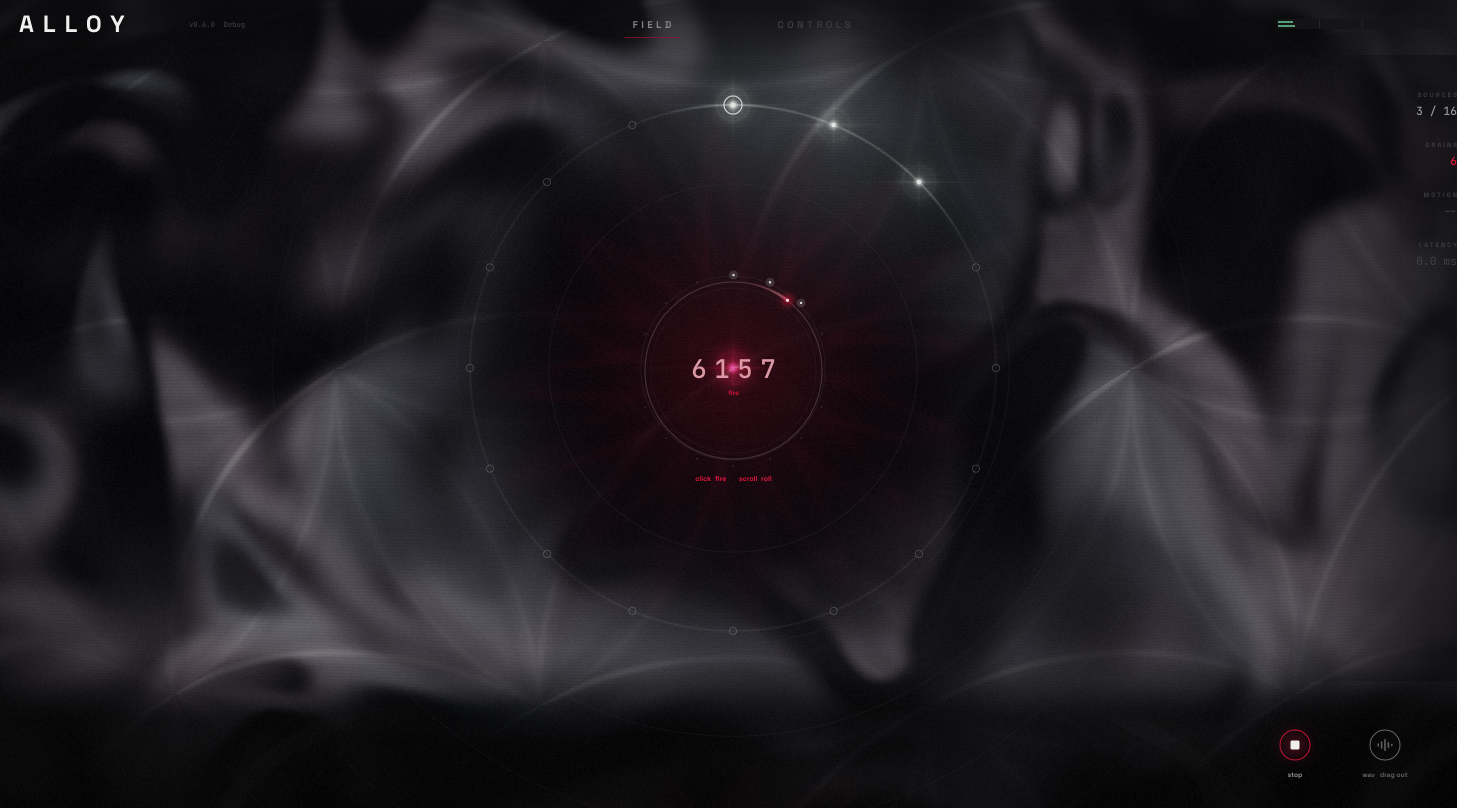
Alloy
Sixteen sources rolled into one sound that exists in none.
VIEW INSTRUMENT →Mandoline
Finds the hits and deals them into a pattern locked to your tempo.
VIEW INSTRUMENT →True Touch
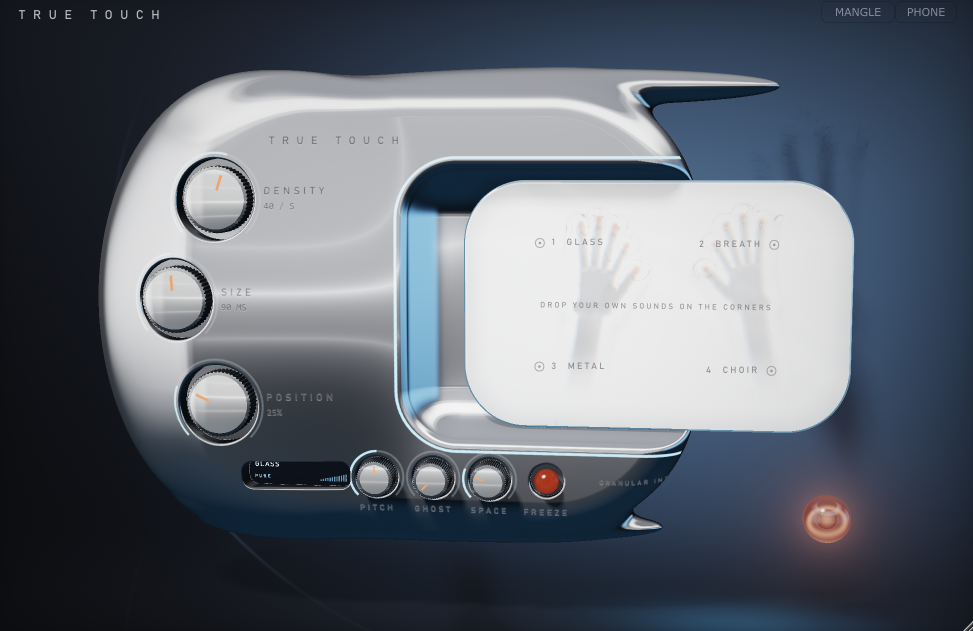
Four sounds on the glass, played as a cloud of grains.
VIEW INSTRUMENT →Mandoline
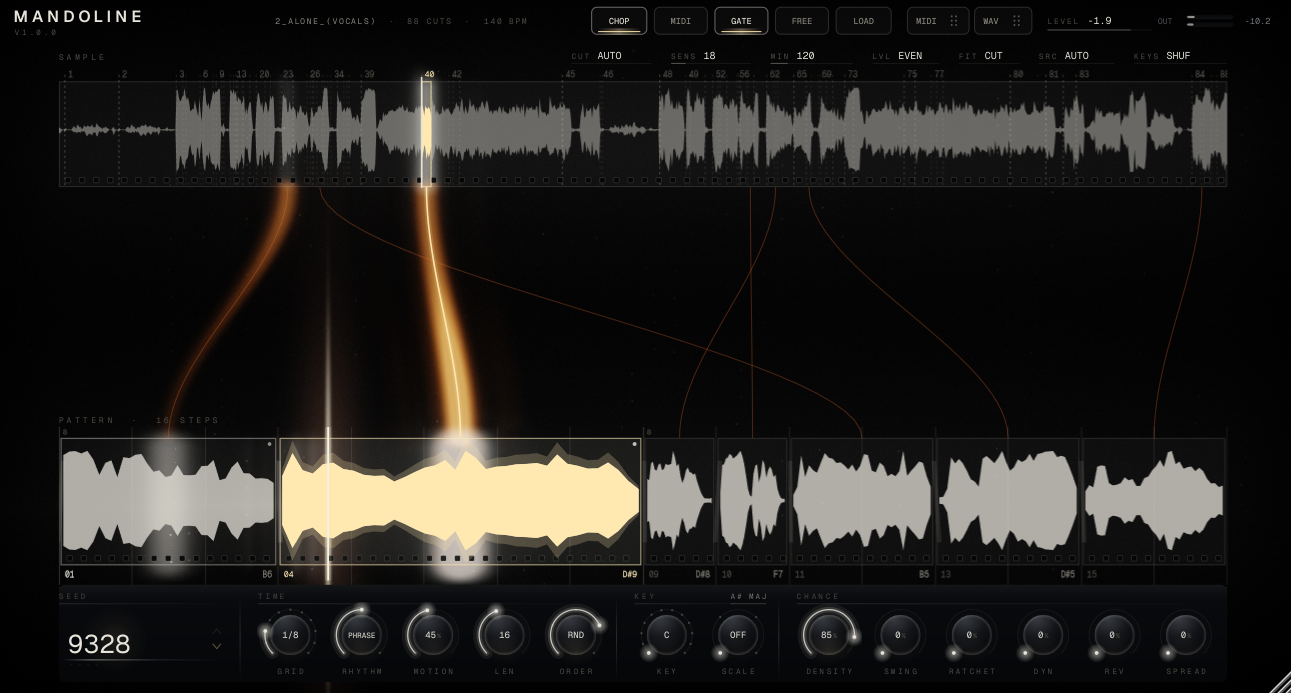
A chop engine. Load a loop or a vocal; it finds the hits, reads the key, and deals them into a pattern locked to your tempo. A seed decides the pattern — same seed, same pattern, every time.
Drop audio on the window. Press play. Scroll down on the seed for a new pattern, up to go back. Drag any slice from the top strip onto any step in the bottom strip to place it by hand, then drag the MIDI or WAV handle into your arrangement.
Cut. Repeat. Cut again.
We believe it is in the public interest to release experimental instruments that push what audio can be.
Some of these tools are unstable by design. Some will do things to a signal that were not meant to be done. We release them anyway, in the open, without tiers or gatekeeping, because the interesting work in sound has always started where the safe tools stop.
Then the machine.
same chops
Mandoline Lite Mandoline Lite Mandoline Lite
Four slices instead of sixteen. One pattern. No time limit, no email.
{{ v.name }}
{{ v.lede }}
{{ v.body }}
{{ v.quote }}
{{ v.body }}
{{ para }}
{{ v.plateLine }}
{{ f.title }}
{{ f.text }}
Six layers,
one surface
Your phone
is the glass
The first screen asks to connect your phone. Scan the plate with your phone's camera, or click USE THE MOUSE to skip it.
Your phone and computer must be on the same Wi-Fi. The camera opens a page served by the plugin. Nothing leaves your network.
Hold the phone sideways. Each half of the screen is the whole glass, so two thumbs play two sounds at once.
Move, and you scratch, bend, scatter and break the sounds live. Let go and it rings out.
MANDOLINE
Slice engine
DROP THE MANDOLINE UI HERE
Eight cuts,
no editing
Transient detection with two controls. Drag a wav in and it is already chopped.
Sixteen steps,
four orders
Per-step slice, pitch, reverse and mute. Six divisions down to 1/32.
Repeatable
accidents
Every roll is a number. Save the number, keep the chop forever.